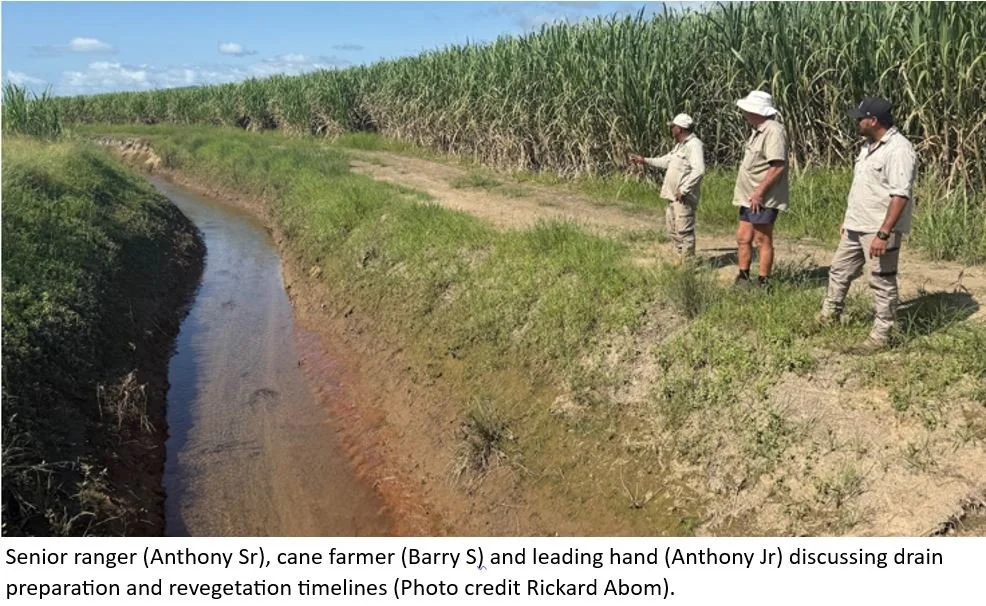
Current agricultural practices have cleared native vegetation, impacting the health of the site. The wetlands and creek network have been altered and degraded due to the introduction of stock and changes in land use, leading to a loss of ecological and cultural values.
Through this partnership, the project will support both ecological recovery and the revitalisation of cultural connections, ensuring long‑term benefits for the land, its heritage, and its future stewardship.
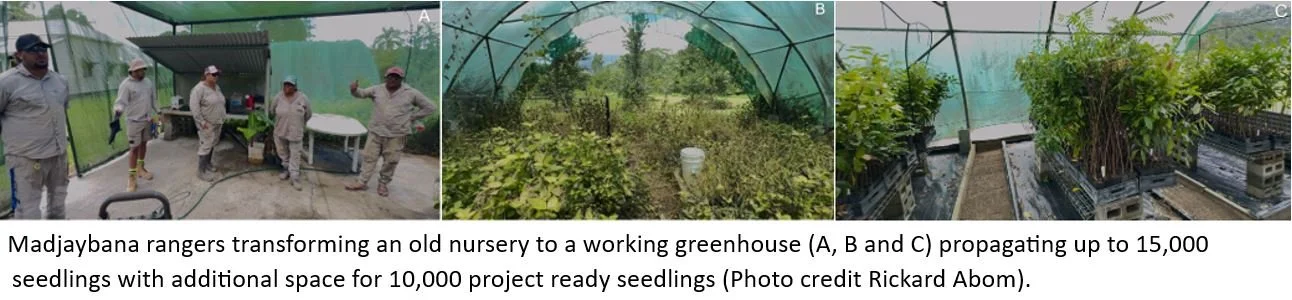
Madjaybana rangers have transformed an old nursery to a working greenhouse propagating up to 15,000 seedlings with additional space for 10,000 project ready seedlings.
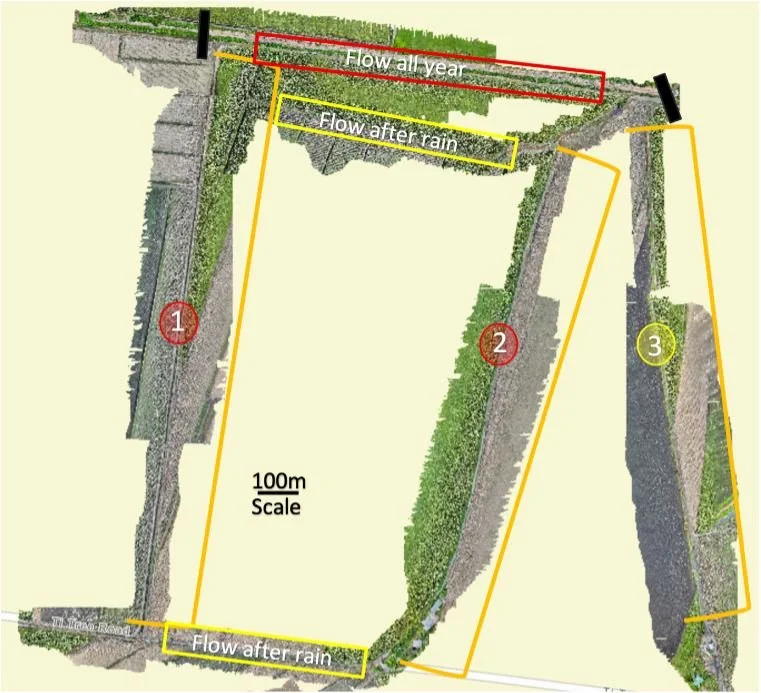
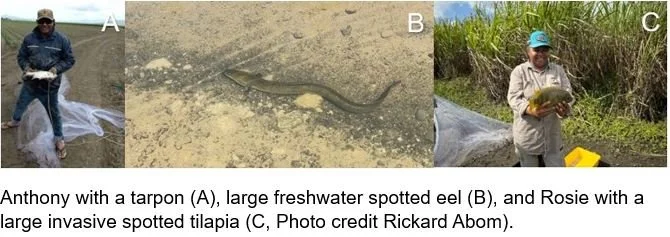
Prior to the onset of the wet season, aquatic fauna surveys were conducted across the three drain sites to quantify native and invasive fish assemblages and provide a pre‑revegetation benchmark. Invasive species, including spotted tilapia, platy and mosquito fish, were detected at sites 1 and 2, providing an important baseline for assessing whether habitat improvements and native vegetation influence pest fish prevalence over the life of the project and beyond.